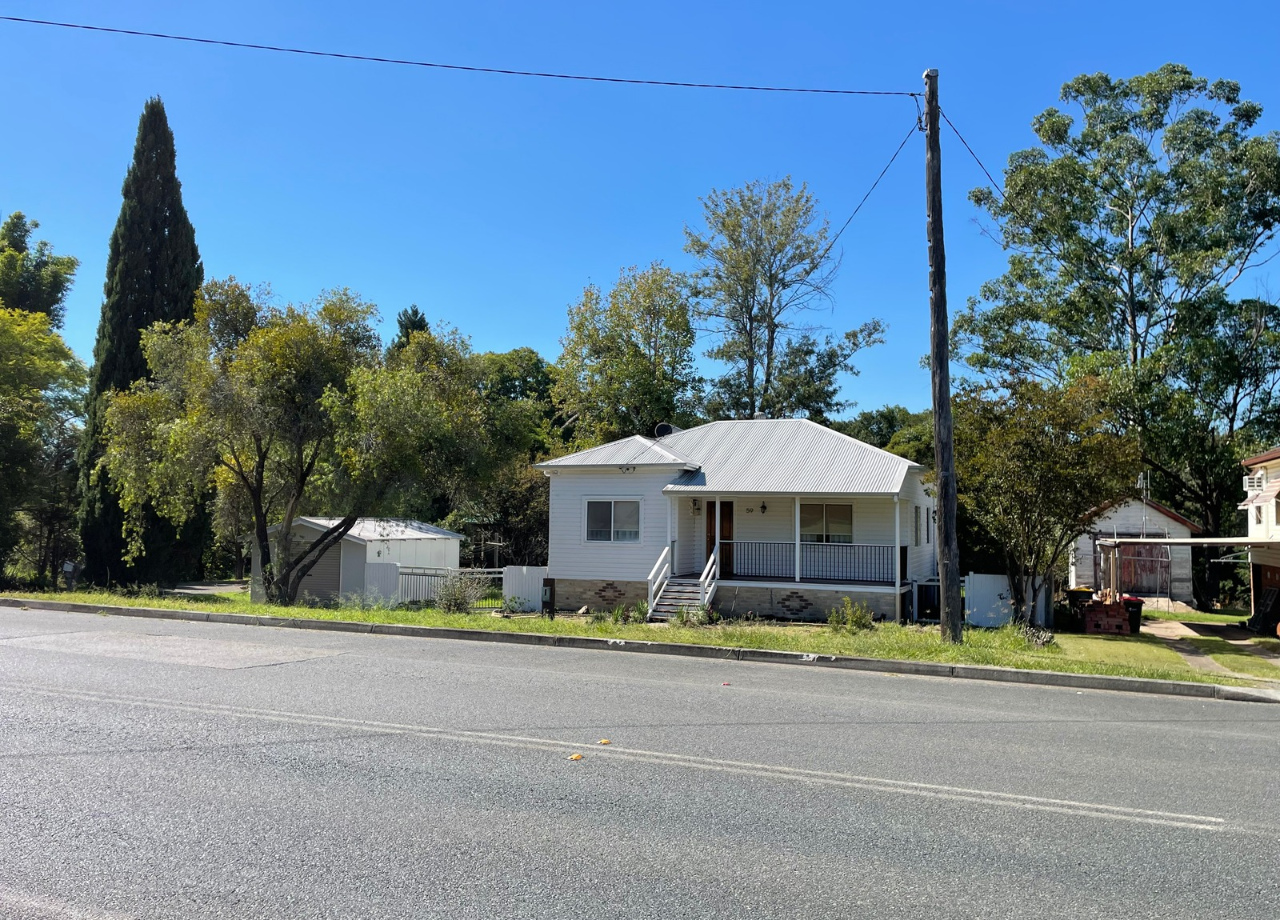
News, insights, and case studies from Charlie Property — real stories, real numbers, and what we're learning as we go, exclusive for Money Partners.
I see my coach four mornings a week, usually before I hit the gym, and some weeks it's five! 😂 It started over a year ago at once a week, and it's slowly crept up from there. My mates reckon I've joined a cult and my accountant thinks I've lost the plot... but it's the most important money we spend in the whole business. More important than any subscription, the rent, the software, anything! So this week I'm opening up what actually happens in those sessions, the science behind why it works, and some tools you can use straight away on your own fear and accountability.


Morning coffee with my coach before hitting the gym. ☕️💪
When I started out I had one flip on the go, just one, and I was a mess!
I was literally laying in bed at 2am running the numbers over and over. I'd worry it wouldn't sell, that the builder would disappear, that the market would drop. One house and my nervous system was completely cooked.
Today we're managing over forty properties and 10+ renos at once across three states. You'd think I'd be ten times more stressed, but I'm the calmest I've ever been.
I walk my dog in the park every day and have lunch on the grass while she chases birds she's never going to catch. And I have my weekends off (mostly lol).
The properties didn't get easier... I got better at handling them. And that came from... coaching.
I'm not the guy betting everything on one house anymore. It happened to work out for me and I'm really grateful for that.
Now I just keep moving from strength to strength, so I can help as many people as want to get into the same position.

Daily dog walks, lunch on the grass, and weekends off… mostly lol. 😂
I meet with a lot of people from our community, and they often ask me about a particular flip they're looking at.
The first thing I've recently found myself saying back to them is... this starts in the head. It sounds like you already know the answer, you just can't access it yet.
Most people phrase the question as if they already know. Something like "do you think this is the right decision?"
Firstly, I can't give advice - I'm not qualified for that! And secondly, if you have to ask me that, it's probably not the right decision... you just might not know that yet.
If you can't get to that part of your brain on your own, it might be worth trying coaching, so you can start backing yourself with those decisions.
These two get mixed up all the time, and I used to do it too.
A mentor has already done what you want to do, and tells you how they did it. I've got mentors in property and I'd be nowhere without them.
A coach doesn't need to have done your thing at all. Adrian couldn't tell you what a stud wall is
His job is to ask the questions that pull the answer out of you. He spots the patterns you can't see because you're stuck inside them, and holds you to what you said you'd do.
A mentor gives you their map, a coach helps you read your own.
Most people only ever get a mentor, then wonder why they still aren't taking action when they already "know what to do"... knowing is rarely the problem, doing is.
Novak Djokovic is one of the greatest tennis players of all time, and he's always had a coach in his box. That coach would get absolutely smashed if they played each other!
So why pay someone who's worse than you at tennis?
Because at that level everyone can hit a great forehand. What wins is staying calm at 5 all in the fifth set, not spiralling after a bad call, and sticking to the game plan when your emotions are screaming at you.
It's all in the head, and property is exactly the same. Once you know the basics, what seperates people is how they handle fear, pressure and decisions.
This is the part that made it click for me.
Most of what we do every day runs on autopilot. Researchers at Duke University found around 40% of our daily actions are habits, not conscious decisions.
So you can know exactly what you should do and still not do it, because the part of your brain making the call isn't the thinking part.
Fear works the same way. Your amygdala, the brain's alarm system, fires before the logical part (the prefrontal cortex) has even caught up.
It doesn't really care if the threat is real or just a "what if" you're replaying at 2am... your body pumps out much the same stress response either way. That's why one house could keep me up all night when nothing had actually gone wrong.
You can't just think your way out of that, because the stress isn't coming from the logical part. That's why telling yourself "don't stress" never works.
What does work is training the autopilot. Your brain rewires itself based on what you repeat (that's called neuroplasticity). So every time you face a fear, check it against reality and act anyway, the alarm gets a little quieter.
That's why I don't do coaching once a month. It's reps, just like the gym!
My coach is Adrian Vonier, an ICF accredited coach who works with a lot of property flippers. We started over a year ago with one session a week, which I thought was plenty.
But I noticed I got way more done in the weeks I had a session. So it went to twice a week, then three, and now it's four mornings a week before the gym, sometimes five!
Adrian just sent me a summary of our first year together. In the last six months alone we've done 88 sessions.
The biggest shifts have been turning blockers into clear action, more confidence with money partners, being steadier under pressure and thinking bigger than the day to day.
The one that means the most to me is my own home. For years it was just a dream sitting in the back of my head, and I always thought things like this don't happen to people like me.
Through coaching it slowly turned into a real plan, and now I'm actually buying it. It's a dream come true
Every session follows roughly the same loop, and you can use it for any meeting:
Then the next session opens with... "how did you go with that action step?"
These are the ones that have made the biggest difference for me, especially around fear and accountability.
1. Ask "is it likely?"
When your brain starts spiralling into the worst case, stop and ask yourself if it's actually likely. Then ask what you'd do if it did happen.
Most of the time the answers are "no" and "I'd handle it", and your alarm system calms right down.
2. Name the fear.
Write down exactly what you're scared of in one sentence. A vague fear feels massive, but a named one is usually pretty manageable.
3. Say one action step out loud to someone.
We keep promises to other people way better than we keep them to ourselves. Tell a mate, your partner or a buddy from our community the one thing you'll do this week, and ask them to check in.
That's basically free coaching!
4. Start every meeting with the outcome.
Before any meeting, call or even a hard conversation, ask "what do I want to walk away with?" You'll be shocked how much time it saves.
5. Do step 1 before planning step 10.
With our education business I was so busy planning the whole future "institution" that I hadn't launched the actual course. If you're stuck, ask yourself if you're planning step 10 to avoid doing step 1
6. Test it live, not on paper.
I was overwhelmed deciding which new businesses to back next year. Adrian's point was that a spreadsheet won't tell you, so launch a small version, get real numbers, then decide.
Same goes for your first deal... a small one teaches you more than a year of reading.
7. Rate it out of 10.
Score each part of your life or business on how much it lights you up. The scores don't lie, and they show you where your energy should go.
People ask if I still need it now that things are going well. Djokovic didn't sack his coach after his first Grand Slam!
The bigger the game gets, the more you need someone in your corner.
More properties means more decisions. More money partners means more responsibility, and a bigger team means more people relying on my head being clear.
This is the bit that matters to you... your money sits in projects that run on my decisions. I'd much rather those decisions come from a calm guy who's checked by someone outside the business four mornings a week, than from a stressed one laying in bed at 2am.
For me coaching isn't a cost, it's the cheapest insurance I've got.
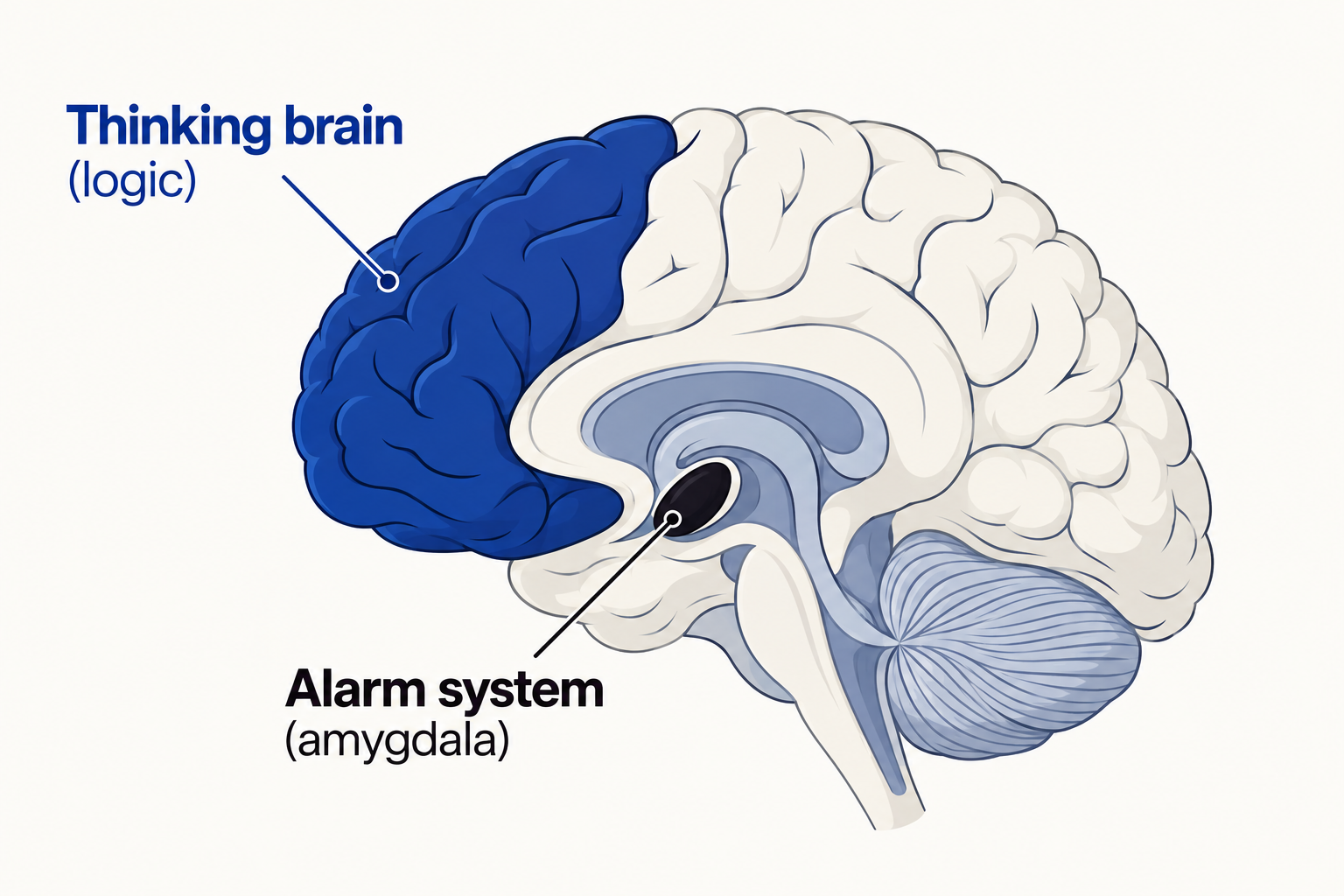
Your amygdala, the brain's alarm system, fires before the logical part (the prefrontal cortex) has even caught up.
If any of this hit home, Adrian's email is adrian@thevoniermethod.com.
He also runs a free mindset call for our community on the last Wednesday of the month at 6pm. The next one is 28 October: https://bit.ly/Mindset-coach
And if you've already got a coach, hit reply and tell me the best thing they've taught you... I'd love to hear it!
Stay limitless!
Charlie only takes on a small number of money partners per deal, so it stays the right fit for both sides.
Become a Money PartnerCharles Corby is the founder of Charlie Property. He built his career helping everyday investors grow wealth through smart property strategies, and now shares that experience through Charlie Property's education and investor communities.
Structured, transparent returns backed by real property. No surprises.
Learn How Return Works



We’ve always been the ones who see things as they could be, not as they are, the ones who step outside the crowd and back what others overlook.
Our strategy is simple but unique: we buy properties off market and under value, renovate them, and create clear profit through flips or flip-holds.
While there’s strong demand to partner on our projects, we keep it selective to ensure the right fit both ways.
And beyond the houses and the money, what really matters is building a strong network of like-minded people - a family, in property.
© All rights reserved 2026 charlieproperty.