News, insights, and case studies from Charlie Property — real stories, real numbers, and what we're learning as we go, exclusive for Money Partners.
Every time I sold a house, the agent, the tax office and stamp duty all took a cut. Here's the farm rule that changed how we buy, reno and hold every house.


It started as a kid, selling apples on the side of the highway and counting every coin in a Vegemite jar after school. 🍏
Every time I sold a house, I handed thousands of dollars to people who didn't lift a finger to help me make it!
The agent took a cut, the tax office took a cut, and the next stamp duty bill was waiting for me the moment I found the next deal. Then I was back to square one with my hand out again 😅
That's how I did property when I started. Buy, flip, sell, repeat... and wonder why I wasn't getting anywhere.
The crazy part is I already knew the answer. I'd learned it as a kid standing on the side of the highway selling apples, counting the coins in a vegemite jar after school. Nobody on that orchard ever chopped down a good tree for one payday!
So this week I'm opening up the exact method we landed on, the one behind every house we buy now. We call it the Charlie Method.
Buy. Reno. Hold. Remote. Money partners. Stack.
Here's each step, how we do it, and why we don't do the opposite.
We don't actually care what the house looks like. It can be brand new, it can be heritage, it can even be a unit. The only thing that matters is that it's undervalued.How we do it:
It's all about the numbers... but I always do things for shits and giggles, so I've got to like the house too. Most of all, I go with my gut
Why: You make most of your money when you buy.Why not the shiny one? Ask yourself, do you want to pay retail for something someone else has already renovated, or do you want to buy it at wholesale price?
Why not the shiny one? Ask yourself, do you want to pay retail for something someone else has already renovated, or do you want to buy it at wholesale price?
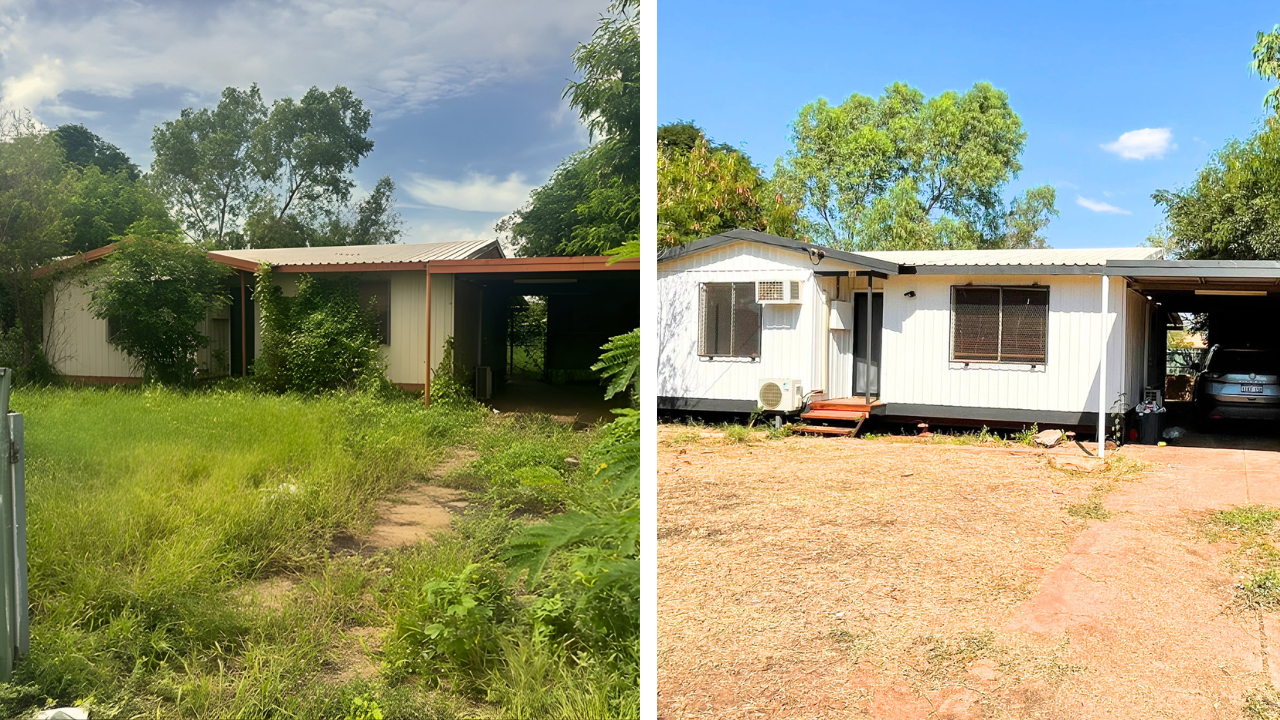
One of our refreshes - a 3-bedroom house in Derby.
We don't actually care what the house looks like. It can be brand new, it can be heritage, it can even be a unit. The only thing that matters is that it's undervalued.How we do it:
It's all about the numbers... but I always do things for shits and giggles, so I've got to like the house too. Most of all, I go with my gut
Why: You make most of your money when you buy.Why not the shiny one? Ask yourself, do you want to pay retail for something someone else has already renovated, or do you want to buy it at wholesale price?
Not a big reno. In fact, the smaller the reno the better! It's about bringing the house up to market standard and making it rental ready.How we do it:
That usually lands somewhere around $10k to $20k.Why: You're manufacturing equity. Street appeal helps the valuation, and it makes the house more appealing to tenants, or to buyers if we ever do sell. And once a tenant moves in, you might only get the house empty again once every 10 years or so, so you want to do the refresh while you've got the chance. Plus I want to be proud of every house in our portfolio!Why not buy and wait? You're relying on the market doing all the work, and that can take years... or not happen at all.
This is the big one. A tree takes work once, then pays you every year. A house is exactly the same.How we do it:
Why:
Why not flip? A flip is one payday. You chop the tree down, sell the apples once, and have to plant from scratch again. We still do the odd flip, but we rarely sell the orchard
The orchard was a long way from town, so we ran everything on phone calls and trust from day one. Property is no different.How we do it:
Why: The best deals are rarely in your own backyard. We're now buying across three states without living in any of those towns.Why not only buy local? You'd be limited to your own postcode and whatever prices it throws at you. For most people around Geelong or Melbourne, that's a pretty expensive postcode!
Banks will usually only value a house at the contract price for the first 6 to 12 months after you buy it. So even if we've bought it well under what it's really worth, the bank won't see that yet.That's why we buy privately with money partners for that first stretch, then swap to a normal mortgage once the house can be revalued at true market price.Banks also won't lend on houses that aren't livable, which rules out a lot of the deals we find!How we do it:
Why: It lets us buy the house at the right price, do the work, and get it valued for what it's really worth before the bank steps in.Why not banks only? You'd be stuck with a valuation at what you paid, and you'd miss every house that needs work before it's livable.
One tree doesn't feed a family, but an orchard does.
How we do it:
Why: More trees means more fruit every year, and spreading them out means no single town makes or breaks you. That's how we went from one flip keeping me up at 2am to over forty properties across three states. It happened to work out for me and I'm really grateful for that.
Why not stop at one? One house is nice, but it won't change your life. The magic is in the stack.

A lot has changed since those afternoons selling apples, but the lessons about hard work, money and making something for yourself have stayed with me.
I can't give advice (I'm not qualified for that!), but here's how I'd think about it:
Charlie only takes on a small number of money partners per deal, so it stays the right fit for both sides.
Become a Money PartnerCharles Corby is the founder of Charlie Property. He built his career helping everyday investors grow wealth through smart property strategies, and now shares that experience through Charlie Property's education and investor communities.
Structured, transparent returns backed by real property. No surprises.
Learn How Return Works




We’ve always been the ones who see things as they could be, not as they are, the ones who step outside the crowd and back what others overlook.
Our strategy is simple but unique: we buy properties off market and under value, renovate them, and create clear profit through flips or flip-holds.
While there’s strong demand to partner on our projects, we keep it selective to ensure the right fit both ways.
And beyond the houses and the money, what really matters is building a strong network of like-minded people - a family, in property.
© All rights reserved 2026 charlieproperty.